Sunday, October 25, 2020

Walt Disney and Nexus Thinking


Disney has always been a favorite of mine and who hasn’t grown up on some Disney movie whether it was Toy Story, Mulan, Snow White or my all-time favorite, Lion King. I was instantly drawn to the video that Dr. Culhane posted in this module and wanted to learn more about Walt Disney and his vision and dreams along with how the supported nexus and sustainability thinking. I have never been to Disney World so was not very familiar with the world of EPCOT or even what it stood for; Experimental Prototype Community of Tomorrow. I will admit it and goes to show how naïve we all can be or unaware of things sometimes. Loving Disney as a child and having visited Disneyland when I was young, I just assumed Disney was all about play and fantasy and fun, yet this video opened the eyes of all the potential and Imagineering. Having Disney+ of course I decided to dive into this world. The next film I watched was “The Imagineering Story” that shows what it takes to design and develop the Disney parks and the magic that Disney is. As I learned more about this, I am always thinking about how this relates to nexus thinking and the sustainable efforts we are hoping to achieve.


The example in the first film of Walt Disney’s original vision of EPCOT about the layout of the community has been interesting as we see the growth of our cities today and urban development. Systems thinking is all around us and we do this on a daily with almost all the decisions we make, no matter how big or little they may be. We analyze all the potential outcomes and benefits or some of the negatives associated with this decision we make. In the original park of Disneyland, Walt Disney designed it around four main parks that branched off of main street or the hub to Fantasyland (film characters), Tomorrowland (promise of the future), Adventureland (natural environment) and Frontierland (spirit of exploration). These parks and concepts can be translated to sustainability pillars and nexus thinking with social, environmental and economic. In order to achieve these things, we have to be looking at the future, our environment and exploring new ways to grow in our globe. The other critical focus with Disney was on our youth and children as they are the future of our globe. This environment promoted this imagination thinking and ability to look at problems as not problems but what is the solution to this in order to make it better. It is an ever-evolving world just like nexus thinking as we always need to be thinking of solutions and new ways to promote sustainability as it is constantly changing.  
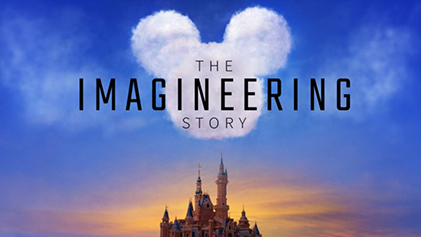

From the mini-series “The Imagineering Story” it shared Walt Disney’s vision and how he thought about things. The opening resonated with me and how when we step into a Disney movie or theme park, we are surrounded by things that stimulate all our senses to transport us to a new world that we could only imagine. I believe this is a great example of system thinking and how in order to make this happen, you have to go through all the processes and experiences that an individual can or might experiences when they step into this world. All the things and events and rides and experiences that Walt Disney brought to life addressed all of these senses to make a complete environment. The Imagineers were a group of eclectic individuals all with unique talents that if you saw in a group, you would not know how they were together or got along. They all had talents and views that were opposite yet brought new ideas and vision to the table to create the masterpieces of Disney. This is how I see nexus thinking and the FEW nexus sometimes of how these things all come together and you would think things don’t fit nicely together if you saw them in a room, yet they all have unique parts and pieces that must be accounted for in order to work. Nexus thinking is a messy yet systemic way of thinking that if you can get one link to connect, you sometimes create ten more problems or issues to address, but you start to create a working system that way. This is why nexus thinking and system thinking regarding global sustainability is so critical today as we solve one thing and then other issues arise and we always need to be learning, researching and thinking of new solutions to support global sustainable development. Development and sustainable development always grows and that is where we are, just as Walt Disney stated, we will never be completed or achieve sustainable development as we will always be growing, learning and expanding in our experiences and global environment. 

“Disneyland will never be completed as long as there is imagination left in the world.” -Walt Disney

Monday, September 7, 2020

Introduction to the Food, Energy and Water Nexus

The current population of our world according to the World Bank is about 7.6 billion people (2018). The United Nations expects our population to reach 9.8 billion by 2050 and then 11.2 billion by the year 2100 (if we are still around then or living on another planet that we can do the same things over again). Some other way to visualize this growth is around 130,000 people are being born each day across our globe. This does not take into account deaths per day but with people living longer lives due to health, medicine and living standards among many things, global population will continue to grow each year. Below are some graphs that illustrate this model.


This situation is expected to be exacerbated in the near future as 60 percent more food will need to be produced in order to feed the world population in 2050 (Food and Agriculture Organization of the United Nations). 

This statement is extremely important as we consider how much food that is and the tremendous growth of our population over the next 30 years. This relates to the issue of the Food, Energy, Water Nexus because as food production increases, so does the demand for energy and water consumption. We cannot just focus on how to provide more food for our population but how that will affect the entire nexus and global energy consumption. One thing that I have noticed in working in developing countries in Latin America and Southern Africa, is that the waste is tremendous and some of the major polluters for global warming and energy waste. The recycling programs and renewable energy resources is not easily accessible in these areas or even non-existent. This statement led me to focus more on creating sustainable ideas and solutions focusing on the developing countries and not just what we can do here in the United States.

The following diagram shows a simplified explanation of how the FEW nexus works. All of these things play an important role in the fight against climate change and sustainability. In an article from the Qatar Tribune, "The nexus approach, it is hoped, will more specifically consider the different dimensions of water, energy and food equally in order to devise solutions in the broader framework of sustainable development."


“We need leaders who will bring insights from each domain where dysfunction is being dealt with and combine them into a broad suite of interleaving overlapping, combinatorially dynamic best practices.”


This statement from Dr. Culhane at University of South Florida resonated with me as we are going into a new election in a few months and leadership roles. It is extremely important to have people in leadership who have a well versed knowledge of various subjects or places people around them that can speak into this. When we are leading from a single lane of knowledge or subject, we can forget how all our decisions and actions will affect other aspects of that role and our communities. A holistic approach to development and the FEW nexus is the new policy framework and “hot” topic in today’s political world. Having a holistic view of our environment and development brings in the system thinking process as well to all that we do. As a program director and measurement and evaluation coordinator for an international NGO, it is important to think of how our programs address all these topics. Working with Children’s Cup has provided opportunities to be a leader in that sense of thinking critically to produce programs that provide holistic development to our future generations in developing countries. Our programs not just address education, or food security or provide medical support, but various aspects of a child’s growth is implemented into these programs as a sort of “nexus” program framework.


If you haven't had a chance to watch this show on Netflix, I highly recommend checking it out as Zac Efron (Yes, High School Musical dude) explores the FEW nexus all over the globe and some new and exciting ways we are fighting climate change. It also brings back a fresh perspective of how we can look at some of the past techniques and things we did to bring back to modernize and support global warming and the FEW nexus. This is a great way to bring in a fresh perspective and make it entertaining for younger generations and mainstream audiences.


Call to Action: Purchase a nice reusable water bottle and get rid of using plastic bottles from the store. See how much more water and money and trash you save by doing this. Comment below and share your experience with this or some other small ways and actions we can take to build a better future and environment for generations to come.


Walt Disney and Nexus Thinking

Disney has always been a favorite of mine and who hasn’t grown up on some Disney movie whether it was Toy Story, Mulan, Snow White or my all...